How to Get Certificates Attested for UAE Embassy and MOFA
A certificate that looks complete in one country may not be accepted in the UAE until the right authorities confirm it. That is what attestation does. It proves that the document is genuine enough for UAE government departments, employers, universities, courts, or immigration-related processes to review.
The process can feel confusing because it usually involves more than one stamp. In most cases, a foreign-issued certificate must be verified in the country where it was issued, then attested by the UAE Embassy or Consulate, and finally attested by the UAE Ministry of Foreign Affairs, often called MOFA.
This guide explains how the process works, which documents usually need it, and how to avoid common delays. It is general information only. Requirements can vary by country, document type, and UAE authority, so always check the latest instructions before submitting original papers.
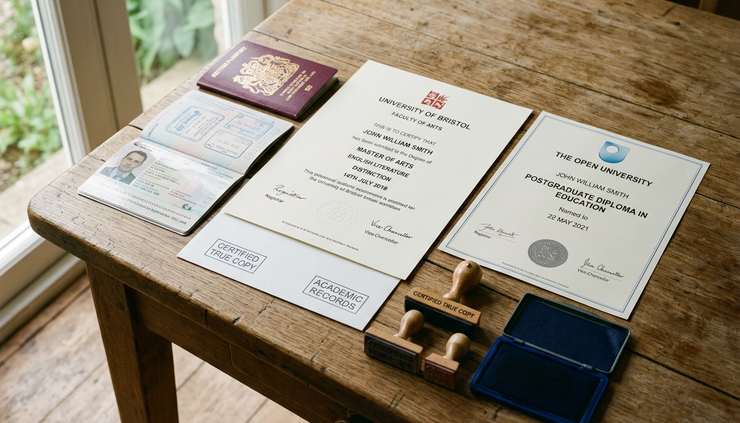
What certificate attestation means
Certificate attestation is the official confirmation of a document’s authenticity. It does not usually confirm that the information inside the document is true in every detail. Instead, it confirms that the document was issued, signed, or sealed by a recognized body.
For UAE use, attestation often follows a chain of verification:
The certificate is checked by the relevant authority in the issuing country.
The foreign affairs department or ministry in that country authenticates it.
The UAE Embassy or Consulate legalizes it.
MOFA in the UAE gives the final attestation.
This chain helps UAE authorities trust a document issued abroad.
For example, if a university degree was issued in another country, the UAE employer or licensing body may not accept it directly. They may ask for the degree to be verified by education authorities, legalized by the UAE mission, and then stamped by MOFA after arrival in the UAE.
That is the basic answer to how to get certificates attested for uae, but the exact route depends on the type of certificate and where it was issued.
Which certificates usually need UAE attestation
Different UAE departments ask for attested documents for different reasons. The most common categories are educational, personal, and commercial documents.
Educational certificates
Educational documents are often required for employment, professional licensing, higher education, equivalency, or visa-related applications.
Common examples include:
Degree certificates
Diplomas
Transcripts
School leaving certificates
Professional training certificates
Educational certificates may need extra verification from the issuing school, university, education board, or education ministry before foreign affairs and embassy legalization.
Personal certificates
Personal documents are usually needed for family visas, marriage registration, school admission, inheritance matters, or other civil processes.
Common examples include:
Birth certificates
Marriage certificates
Divorce certificates
Death certificates
Police clearance certificates
Medical certificates
Name change documents
Some personal documents may first need notarization or civil registry confirmation in the country where they were issued.
Commercial certificates
Commercial certificates are used for business setup, trade, agency agreements, import and export, banking, or legal matters.
Common examples include:
Certificates of incorporation
Power of attorney documents
Board resolutions
Commercial invoices
Memorandum and articles of association
Good standing certificates
Agency agreements
Commercial documents often require chamber of commerce or business registry verification before foreign affairs and UAE Embassy attestation.
The usual attestation route for UAE Embassy and MOFA
The order matters. If one stamp is missing, the next authority may reject the certificate. While each country has its own procedures, the route below is the standard pattern for many foreign-issued documents.
Step | Authority | What it confirms |
1 | Issuing body or local authority | The document came from a recognized source |
2 | State, regional, or national department | The signature, seal, or issuing authority is valid |
3 | Ministry or Department of Foreign Affairs in the issuing country | The document is ready for international use |
4 | UAE Embassy or Consulate | The UAE mission recognizes the foreign authentication |
5 | UAE MOFA | The document is valid for use inside the UAE |
The phrase certificates attested for uae embassy and mofa usually refers to the last two major UAE-facing steps: legalization by the UAE mission abroad and final attestation by MOFA in the UAE.
Step 1. Check the exact requirement before you start
Before sending any original certificate, find out who is requesting the attested document and what version they need.
Ask these questions:
Does the authority need the original certificate attested, or will a certified copy work?
Does the document need translation into Arabic?
Is embassy attestation required, or is another legalization route accepted?
Does the document need verification from a university, registrar, court, chamber, or civil registry first?
Is there a validity period for the certificate?
This step saves time. A police clearance certificate, for example, may have a shorter acceptable validity period than a degree certificate. A birth certificate may need civil registry verification, while a power of attorney may require notarization first.
If an employer, university, or licensing body gave you written instructions, follow those instructions closely.
Step 2. Prepare the certificate and supporting documents
Most attestation applications require more than the certificate itself. The usual support documents include:
Original certificate
Clear copy of the certificate
Passport copy
Emirates ID copy, if available
Visa copy, if available
Authorization letter, if someone else is submitting it
Application form or online reference number
Translation, if requested
For educational certificates, you may also need transcripts, a letter from the institution, or proof that the institution is recognized. For commercial documents, trade licenses, company registration papers, or board approvals may be requested.
Make sure names match across documents. Small differences in spelling can cause delays, especially when comparing passports, degrees, marriage certificates, and birth certificates.
Step 3. Complete local verification in the issuing country
The first official stamp usually comes from the country that issued the certificate. This stage proves that the document is real according to local records.
The authority depends on the certificate type:
Educational documents may go through the school, university, education board, or education ministry.
Birth, marriage, and death certificates may go through a civil registry or local government office.
Court documents may go through a court clerk or judicial department.
Commercial papers may go through a chamber of commerce, notary, or company registry.
Some countries require notarization before government authentication. Others send documents directly to a state or national department. If the certificate was issued in the United States, for example, the route can depend on whether it is a state document, federal document, notarized document, or academic record.
Do not skip this stage. The UAE Embassy usually will not attest a document unless the correct local and foreign affairs authentication has already been completed.

Step 4. Get authentication from the foreign affairs authority
After local verification, the document usually goes to the Ministry of Foreign Affairs, Department of State, or equivalent foreign affairs office in the issuing country.
This authority confirms the signature or seal of the previous authority. It does not normally review the content of the certificate. Its role is to prepare the document for use outside the country.
In many countries, this step may be handled by mail, through an online application, at a service center, or through an authorized agent. Processing times can vary, so avoid booking travel or committing to a deadline before checking the current timing.
Once the foreign affairs stamp is placed, the certificate is usually ready for UAE Embassy or Consulate attestation.
Step 5. Submit the certificate to the UAE Embassy or Consulate
The UAE Embassy or Consulate in the issuing country legalizes the document for UAE use. This is the embassy attestation stage.
The mission will typically check that:
The certificate has the required prior authentication.
The seals and signatures follow the expected chain.
The document type is eligible for attestation.
Fees and application forms are complete.
Submission methods vary. Some UAE missions accept documents directly, while others use approved service providers or courier-based systems. You may need an appointment, online application, or payment receipt.
Check the embassy or consulate instructions carefully before sending original documents. If a translation is required at this stage, use the type of translation specified by the mission or the requesting UAE authority.
Step 6. Complete MOFA attestation in the UAE
After UAE Embassy attestation abroad, the final step is attestation by the UAE Ministry of Foreign Affairs. This is often called MOFA attestation.
MOFA attestation is usually required after the document reaches the UAE. The certificate may be submitted through MOFA’s official channels, service centers, smart app, courier service, or an approved typing or service center, depending on the current system and document category.
MOFA checks the UAE Embassy or Consulate legalization and places the final UAE attestation on the document. Once this is done, the certificate is usually ready to submit to employers, immigration authorities, schools, courts, licensing bodies, or other UAE entities.
Keep both the original attested certificate and scanned copies. Many applications ask for uploads first, then request the original later for inspection.
When translation is needed
Attestation and translation are related, but they are not the same.
If your certificate is not in Arabic or English, the UAE authority receiving it may ask for a legal translation. In some cases, even English documents may need Arabic translation for court, immigration, or civil use.
The safest order depends on the document and authority. Sometimes the original certificate is attested first, then translated by a legal translator in the UAE. In other cases, the translation itself must also be stamped.
For high-stakes documents, such as marriage certificates, court orders, or powers of attorney, ask the receiving authority which version they want:
Original certificate only
Attested original plus legal translation
Attested translation
Both original and translated copies
This avoids paying twice or getting the wrong document stamped.
Common mistakes that delay attestation
Many delays come from small errors. Before submission, check for these issues.
Name mismatch
The name on the certificate should match the passport as closely as possible. If there are initials, missing middle names, spelling variations, or changed names, you may need supporting proof.
Wrong order of stamps
UAE Embassy attestation usually comes after local and foreign affairs authentication, not before. MOFA attestation usually comes after UAE Embassy legalization.
Submitting a laminated certificate
Some authorities cannot stamp laminated documents. If your certificate is laminated, ask the relevant office what to do before sending it.
Using an unrecognized copy
A plain photocopy may not be accepted. If a copy is allowed, it may need notarization or certification first.
Ignoring document validity
Some certificates, such as police clearance certificates or medical documents, may only be accepted for a limited time.
Missing translation rules
A translation done by the wrong provider may be rejected. Use a legal translator if the UAE authority requires one.
How long the process can take
There is no single timeline for all certificates. The timing depends on the issuing country, document type, verification authority, embassy process, courier time, and MOFA submission method.
A simple personal certificate with clear records may move faster than an educational certificate that requires university verification. Commercial documents can also take longer if company signatures, chamber stamps, or board approvals are missing.
Build in extra time if:
The certificate was issued many years ago.
The issuing institution has merged, closed, or changed names.
You need documents from more than one country.
The certificate needs translation.
You are applying during holidays or peak travel periods.
If a deadline matters, start with the authority that will receive the final document in the UAE. Their exact requirement should guide the full process.
Should you do it yourself or use a service provider
You can often handle attestation yourself if you are in the issuing country, understand the local process, and have enough time. This may work well for simple documents.
A service provider may help when the process crosses borders or involves several authorities. This is common when the certificate holder is already in the UAE while the document was issued elsewhere.
Before using any service provider, check:
Whether they handle your document type and issuing country
Whether they use official channels
What fees are government fees and what fees are service charges
How they protect original documents
Whether tracking is available
What happens if a document is rejected
Do not hand over original certificates without a receipt and clear written terms.
What a successfully attested certificate looks like
A fully attested certificate for UAE use should show a clear chain of official stamps or seals. The exact appearance varies by country, but the file should generally include evidence of:
Local verification or notarization, if required
Foreign affairs authentication in the issuing country
UAE Embassy or Consulate attestation
UAE MOFA attestation
Once MOFA has attested the document, make high-quality scans of every page, including the back side if stamps appear there. Store the original safely. For many UAE applications, that final MOFA stamp is the point where the document becomes ready for official use.
Getting certificates attested for the UAE is not difficult once the order is clear. Start with the requesting authority’s requirement, verify the document in the issuing country, complete foreign affairs authentication, obtain UAE Embassy attestation, and finish with MOFA in the UAE. The fewer assumptions you make, the smoother the process will be.


Comments