UAE Attestation Service Review: What to Check
Updated: Apr 26
A delayed attestation can hold up a job start date, a family visa, a university admission, or a company filing. That is why a proper UAE attestation service review should focus less on marketing claims and more on what actually affects approval: document handling, sequence accuracy, country-specific knowledge, and turnaround reliability.
For most clients, the real challenge is not understanding what attestation is in theory. It is figuring out which authority comes first, whether embassy legalization is required, how translation fits into the process, and what happens if a certificate was issued in another country years ago. A service is only as good as its ability to manage those moving parts without creating delays or rejections.
What a UAE attestation service review should really measure
Many reviews stop at broad statements like fast service or helpful staff. Those points matter, but they are not enough when your documents are tied to employment, immigration, education, marriage, or commercial compliance. A useful review should assess whether the provider understands the exact pathway for the document type involved.
Educational certificates, birth certificates, marriage certificates, and commercial records do not always follow the same route. Some require notarization or home-country authentication before embassy legalization and UAE MOFA attestation. Others may need certified translation or additional verification depending on the issuing country and intended use. If a provider treats every file the same way, that is usually where problems start.
A strong service should also be judged by how clearly it explains requirements before collecting documents. Clients should know what originals are needed, whether scans are enough for pre-checking, what timeline is realistic, and which government fees are separate from service charges. Clear process communication is not a bonus feature. It is part of risk control.
Speed matters, but only when the sequence is right
Fast processing is one of the first things customers look for, especially in the UAE where visa, onboarding, and business deadlines can move quickly. But speed without procedural accuracy can cost more time than it saves. A document sent to the wrong stage, or submitted before supporting legalization is complete, may be rejected and returned.
That is why the best providers do not simply promise urgent turnaround. They check the origin of the document, confirm the destination requirement, and map the process in the right order. In practice, this is what separates a managed service from a courier-style handoff.
For example, a degree certificate for employment may involve one set of checks, while a birth certificate for family visa support may require another. Commercial documents often carry their own compliance requirements, especially when used for contracts, licensing, or cross-border business activity. A service that can move quickly while preserving the correct sequence delivers real value.
Transparency is one of the strongest trust signals
A reliable attestation provider should be transparent about three things: timelines, costs, and limitations. Timelines should be described as estimated, not guaranteed, because embassy schedules, public holidays, verification backlogs, and country-specific procedures can affect processing. Honest providers explain this upfront instead of overpromising.
Pricing should also be broken down clearly. Clients need to understand the difference between government fees, embassy charges, translation costs, courier expenses, and service fees for coordination. If the quote is vague, the final bill can become difficult to predict. For time-sensitive or budget-sensitive cases, that creates unnecessary pressure.
Limitations matter too. Some documents may be damaged, laminated, incomplete, or issued in formats that need additional steps. Some jurisdictions are simply slower than others. A trustworthy service will say so early and advise on the likely route instead of giving a generic yes to every inquiry.
Coverage across document types and countries makes a practical difference
One of the biggest gaps in the market is narrow processing capability. A provider may handle UAE MOFA attestation well but struggle when a case involves prior embassy legalization, translation, or certificates from less common jurisdictions. That becomes a problem for expatriates and businesses dealing with multinational paperwork.
A stronger service model is end-to-end coordination across document categories and countries of origin. This matters for professionals moving from one jurisdiction to another, families bringing personal records into the UAE system, and companies legalizing commercial documents for official use. Broad jurisdiction coverage is not just a scale claim. It reduces handoffs, confusion, and fragmented communication.
For clients with multiple requirements, this can be especially valuable. A single case may involve degree certificate attestation, marriage certificate attestation, legal translation, and family visa support. Managing these through separate providers increases the chance of mismatch in timing or paperwork. Centralized coordination usually leads to fewer delays.
Convenience is not a luxury in attestation work
Door-to-door collection and delivery can sound like a simple customer service feature, but in document legalization it is often a serious operational advantage. Many clients are working full-time, traveling, or managing family schedules. Others are outside the emirate where the submission step is taking place. Convenience reduces friction, but it also reduces the risk of document mishandling between stages.
This is where service design matters. Secure pickup, status updates, document tracking, and clear handover procedures all contribute to confidence. When originals are involved, people do not want uncertainty. They want to know where the file is, what stage it has reached, and whether anything else is needed.
A dependable provider builds reassurance through process discipline, not just friendly messaging. That means timely responses, organized documentation checks, and realistic progress updates when timelines change.
Common warning signs in a UAE attestation service review
If you are comparing providers, some red flags are easy to miss. One is generic pricing with no breakdown of what is included. Another is a one-size-fits-all timeline regardless of country of origin or certificate type. That usually suggests limited procedural assessment.
A second warning sign is weak pre-screening. If a provider is ready to collect documents without asking where they were issued, what they will be used for, whether translation is needed, or whether prior legalization is complete, the process may not be properly planned.
A third issue is poor communication after handover. Delays can happen in attestation work. What matters is whether the provider explains the reason, adjusts the timeline honestly, and keeps the client informed. Silence creates more concern than delay itself.
What good service looks like in practice
The strongest attestation providers tend to share a few habits. They ask precise questions early. They review document origin and use case before committing to a timeline. They explain the sequence in plain language. They distinguish between service fees and authority fees. And they stay engaged until the final attested document is returned.
This is especially important for clients handling urgent employment onboarding, admissions, dependent visas, or commercial filings. These are not low-stakes documents. The service needs to be organized enough to reduce administrative burden while careful enough to avoid shortcuts that create rejection risk.
In that sense, a good provider is not just moving papers between counters. It is managing compliance steps on the client’s behalf. That is why experience, jurisdiction knowledge, and responsive coordination matter more than promotional claims.
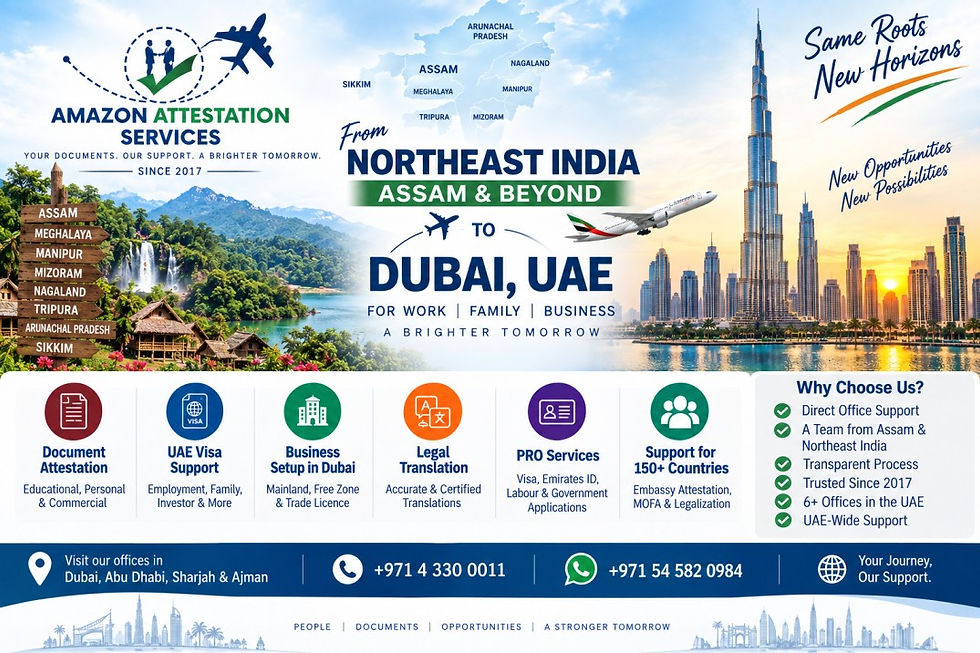
Amazon Attestation Services fits this model when clients need managed support across document types, international jurisdictions, UAE MOFA procedures, translation, and pickup and delivery. The value is not that the process becomes simpler by itself. The value is that an experienced team handles the complexity in the right order.
The right choice depends on your case
There is no single best service for every file because attestation needs vary. A straightforward UAE-issued document may require less coordination than an overseas educational certificate with embassy legalization, translation, and urgent submission deadlines. The right provider depends on how much complexity sits behind the document.
For simple cases, speed and convenience may be the top priorities. For cross-border or multi-document cases, depth of process knowledge becomes more important. Businesses usually need consistency and traceability, while individuals often care most about clarity and time savings. Both are valid. The provider should be able to adjust its handling accordingly.
If you are reading a UAE attestation service review before making a decision, focus on the details that affect outcomes: procedural accuracy, transparent pricing, communication standards, country coverage, and how confidently the provider handles exceptions. A smooth experience usually starts long before submission - it starts with correct guidance at the first inquiry.
When your documents are tied to a deadline that matters, the best service is the one that treats accuracy and communication as part of the job, not as extras.


Comments